01What an empty house communicates
A vacant significant home is hard to sell. Scale becomes difficult to read without reference points, large rooms photograph as flat planes, and the property carries the atmosphere of somewhere recently left rather than somewhere worth arriving at.
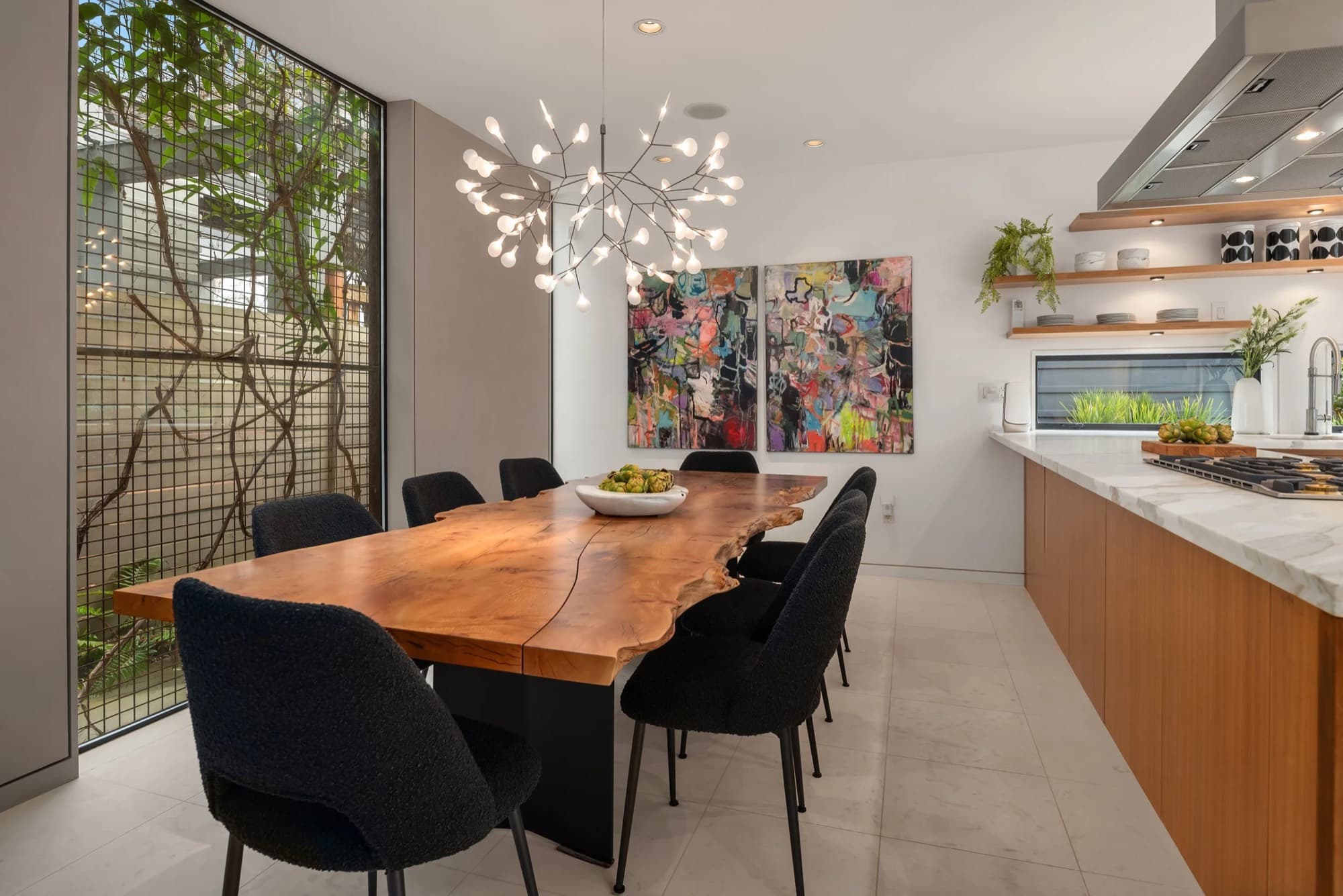
Art solves two problems at once. It gives the eye somewhere to land in a large room, and it signals that the house has been lived in by someone with a point of view. Both change how the property is remembered after a viewing — which matters more than it sounds when a buyer is comparing four houses from memory a week later.
The honest version of the argument
I want to separate what I believe from what gets claimed. There is no reliable public evidence that fine art specifically produces a measurable price premium or a specific reduction in days on market. No public dataset separates art from the rest of a staging package, and any proposal quoting you a precise figure for the art alone has gone well past what the research supports.
What I will argue is narrower. A well-presented property attracts more qualified viewings, photographs better in the channel where nearly every buyer first encounters it, and is easier for an agent to show. Art is one of the more effective contributors to that, particularly in large or architecturally unusual rooms. That case stands on its own without inflating it.
Fewer works, better works
The instinct to fill every wall is the one to resist. A handful of strong placements in the rooms that carry the property — the entry, the main living space, the primary bedroom — does more than a full house of anonymous canvases, and usually costs less.
Quality is also legible to this buyer. At this level a meaningful share of buyers, or the advisors standing next to them, will know whether what is on the wall is real or decorative. Filler does not read as neutral. It reads as a house that needed dressing.
- Prioritise the entry sightline and the principal living space
- Leave some walls deliberately empty
- Choose for the architecture, not for what is currently fashionable
- Check how each placement reads in the listing photography, not only in the room
When I tell sellers not to bother
An art programme does not fix a mispriced house, a poor floor plan, deferred maintenance or bad photography. Where the budget is finite those come first, and anyone recommending otherwise is solving the wrong problem.
It is also the wrong spend for properties selling on land, view or development potential, and for a home going to a buyer who intends to gut it. I have talked sellers out of this more than once.
The disclosure that prevents a bad closing
Where works are borrowed for the sale period they do not convey, and that belongs in the listing materials and gets repeated at showings. The same applies where the owner's own collection leaves on completion.
Handled plainly this is a non-issue. Handled vaguely it becomes a problem at exactly the moment a transaction is most fragile, and I have seen it sour an otherwise finished deal.